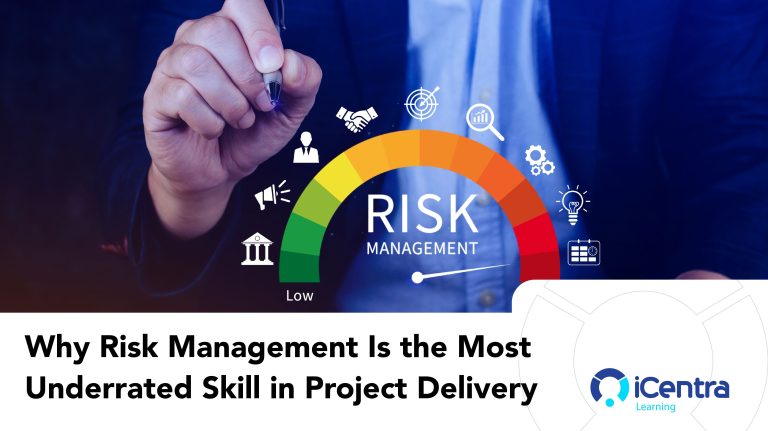
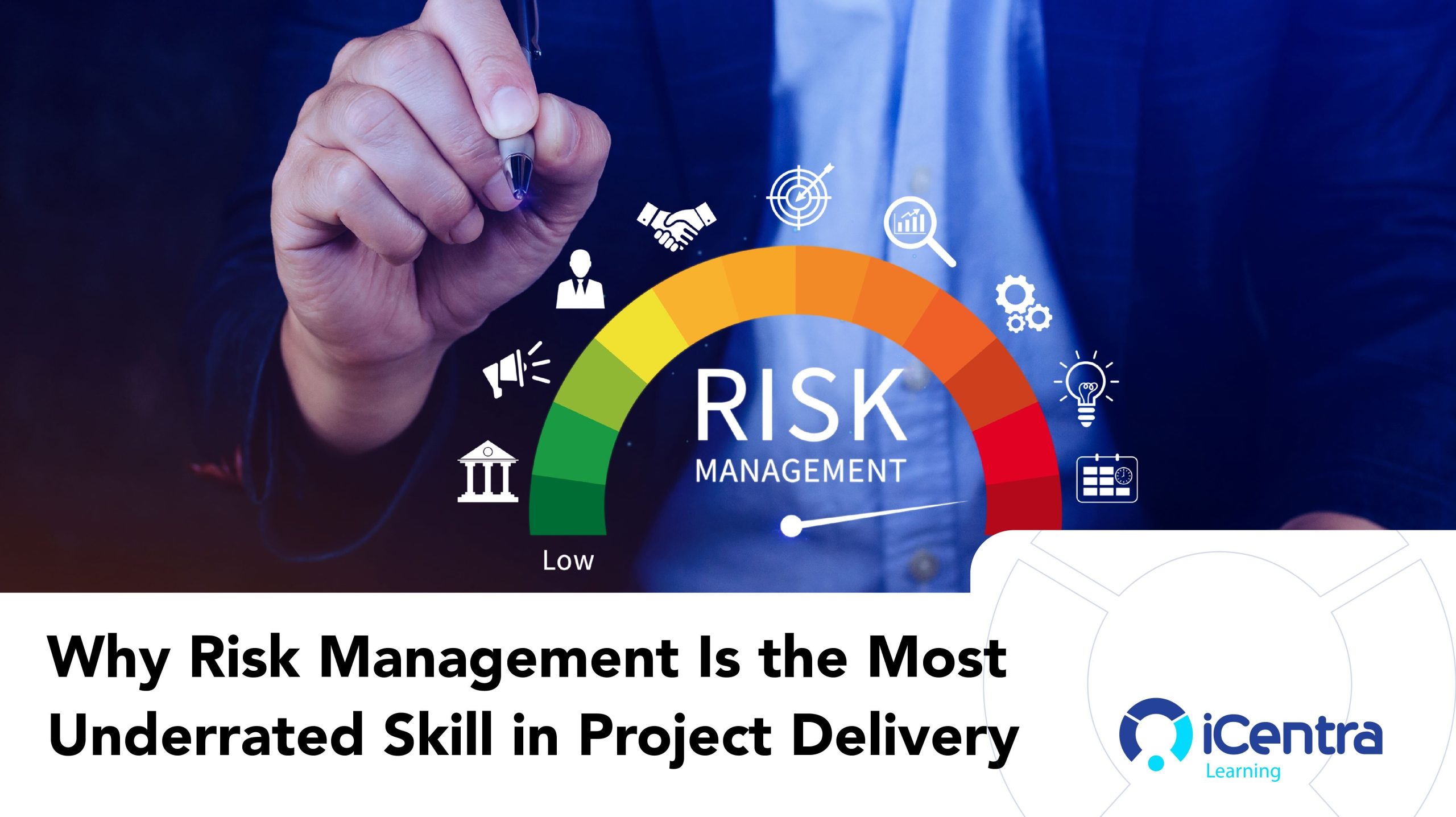
Why Risk Management Is the Most Underrated Skill in Project Delivery.
Most professionals think risk management is about documentation.
Registers. Logs. Compliance checklists.
That’s the mistake.
Risk management is not an administrative function.
It is a decision-making discipline.
And in high-performing environments, it is the difference between:
* Projects that “go according to plan”
* And projects that survive reality.
The Illusion of Control in Project Delivery
Many project teams operate under a dangerous assumption:
“If we plan well enough, we can eliminate uncertainty.”
You cannot.
Markets shift. Stakeholders change priorities. Technology fails.
Execution environments are inherently unstable.
So the real question is not:
“How do we avoid risk?”
It is:
“How do we build systems that anticipate, absorb, and respond to it?”
This is where most professionals are untrained.
Risk Management Is Not About Avoidance — It Is About Positioning
At its highest level, risk management does three things:
1. It clarifies exposure
You understand what can go wrong and more importantly, what matters.
2. It improves decision speed
When risks are predefined, decisions are faster, not reactive.
3. It protects value delivery
Not just timelines but outcomes, stakeholder trust, and strategic intent.
Without this, execution becomes fragile.
Why It Remains Underrated
Because it is poorly taught. Most training focuses on:
* Terminologies
* Framework memorization
* Static case scenarios
But real-world execution requires:
* Dynamic thinking
* Contextual judgment
* Cross-functional awareness
This is not theoretical knowledge.
It is applied intelligence.
The Shift: From Awareness to Capability
Organizations are no longer rewarding professionals who can identify risk.
They reward those who can:
– Interpret risk in context
– Make trade-off decisions under uncertainty
– Drive outcomes despite volatility
That level of competence is built not assumed.
Where This Becomes Practical
If you are leading projects, managing stakeholders, or transitioning into strategic roles, this is no longer optional.
It becomes a core differentiator.
To build this capability with structure and real-world application:
Explore our Risk Management Professional Training
This program is designed to move you beyond theory into execution-ready thinking.
Final Thought
Projects rarely fail because people did not work hard.
They fail because:
* Risks were seen too late
* Decisions were made too slowly
* Or execution could not adapt fast enough
Risk management, done properly, solves all three.